Mike Clough's Japanese Knotweed blog

Welcome to my blog. Here I'll be posting about the most important issues in the Japanese Knotweed industry and how it affects companies. Please do drop me an email with any thoughts or comments.

Subscribe to my blog

Active Ingredients and How They Work

May 16th, 2012 by Mike Clough

One of the most important issues that we have at Japanese Knotweed Solutions is the careful management of chemicals. Whichever method of eradication that we use we always want to make minimal impact on the environment.

This is why we develop close links with the chemical suppliers and the chemical manufacturers.

We also hold BASIS qualifications and attend regular updates on chemical usage and keep updated on regulations to ensure that our clients and the environment get the best possible chemical treatment service.

As part of this service we have been advising clients as to how the chemicals that we use actually work.

Picloram:

Picloram is the active ingredient in Tordon 22K.  Picloram acts as an ‘auxin mimic’ or synthetic growth hormone. It kills weeds by mimicking the plant growth hormone auxin.

When applied and absorbed by the plant, it causes uncontrolled and disorganised plant growth. This ultimately leads to the death of the weed.

Because Picloram does not degrade rapidly, it delivers long lasting control.

Tordon 22K controls of a wide range of deep-rooted perennial and herbaceous weeds. It is particularly effective against Japanese Knotweed.

Picloram will control the ‘weeds’ but when applied at the recommended dose rates, it will not harm grass.

Aminopyralid and Fluroxypyr:

Aminopyralid and Fluroxypyr are the active ingredients in Synero.

Aminopyralid was developed specially developed for the management of noxious and invasive broadleaf species at very low dosage rates.

Both Aminopyralid and Fluroxypyr are pyridine carboxylic acid herbicides. They move throughout the ‘weed’, accumulating in the meristematic tissues, including the roots. They disrupt plant growth metabolic pathways, affecting the growth process, which leads to control of susceptible species.

Aminopyralid and Fluroxypyr will control the weeds but when applied at the recommended dose rates, they will not harm grass.

Mike C


Let’s Just Ignore it…

May 9th, 2012 by Mike Clough

There will always be a group of people who can’t be bothered.

You know who I’m talking about, the ones who empty their ash trays out of the window when they are at traffic lights, the ones that throw their McDonalds wrappers out of the window when driving along a country road. They expect a tidy clean countryside when they are out with their offspring but cannot make the connection that they are somehow responsible for the pollution they cause.

These are the people that don’t notice anything; Japanese Knotweed could literally grow up their garden path and knock on the door before they knew it was even in the vicinity.

How can we ever get these people on our side?

‘Spend money on getting rid of a plant? Why bother? Let’s spend the money on a new Playstation, the latest video game or perhaps buy a new widescreen telly.’

Consumerism taking over from any sort of pride that we used to have as a Nation in our British Countryside…

Unfortunately we know this ‘type’ of person is never going to change. It would take a miracle (…or maybe an alien plant destroying the TV reception would get their attention).

So, dear reader, what this means is that the few that care have to shout even louder.

This blog is read by roughly 700 people a month, give or take a few (or when we have a weak headline) currently the highest read blog was titled ‘Anal’…with 1580 hits…wonder why?

So those 700 or so interested parties have to make enough of a racket to be heard of the deafening silence of the ‘couldn’t-care-less brigade’.

Alien species are a major threat to our country’s bio-diversity. SHOUT IT OUT!

We need to keep fighting and keep responding to aliens taking over our British Countryside, we need to keep Local Authorities spending our taxes on ensuring that we have a countryside to leave to our children.

We need bio-diversity for the planet’s welfare and the future of the human race.

If you see a problem, shout about it; write to your councillor, tell your Local Paper – IF YOU DON’T, NOBODY ELSE WILL…

….THEY’RE TOO BUSY WATCHING EASTENDERS… AND HAVING A BURGER.

Mike C


Here We Go Again…

May 2nd, 2012 by Mike Clough

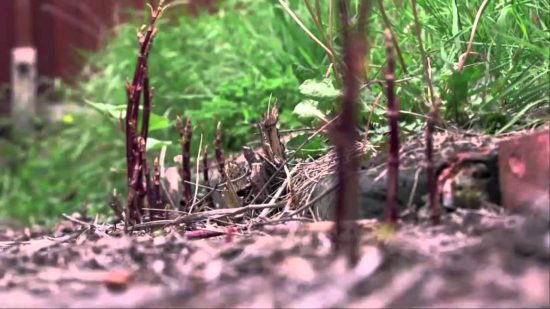
It’s hard to believe that another year has flown by and Japanese Knotweed is starting to grow again…!

So all you readers out there who have been ignoring my ranting about invasive plants, how do you feel now that the mortgage lender Santander has stated that they will ‘…not lend on a property with Japanese Knotweed within 30m of a boundary?’

Japanese Knotweed has the ability to damage hard surfaces. It is capable of damaging building foundations and can crack through concrete…Japanese Knotweed is present in every 10 km square of the UK and grows at a rate of 7 metres in all directions per season.

Feeling nervous yet? Are you listening a bit more?

We have a bit of an ‘in house’ competition every year for who can take the first photograph of developing shoots and this year’s prize went to our Managing Director Mr Alex Dayes who spotted the first signs of new growth on the 18th February this year in Ireland, Leeds and Manchester.

One of the reasons that Japanese Knotweed is so successful is that it gets an early jump on spring growth beating its competitors to grab all the sunlight. It then secretes and enzyme which prevents other plants growth in a strategy called ‘allelopathy’ – pretty amazing stuff really.

So now I have your attention and now you know that the plant is starting to grow again – what are you going to do about it?

Well the UK has some pretty strict rules on what can and can’t be done with Japanese Knotweed infested land. It is an offence under the Wildlife and Countryside act (1981) to plant or otherwise cause the plant to grow in the wild. It is also an offence if a land owner allows Japanese Knotweed to grow from his land into an adjacent property.

Case law can be quoted in the majority of Knotweed related legal arguments. One of the most often used situations was ‘Flanagan vs Wigan Metropolitan Borough Council’ in the Leigh County Court. The case was brought by a private landowner whose garden was being invaded by Japanese Knotweed from the neighbouring Council-owned land.

The outcome of the case was that the Council were required to comply with an order to treat a 1 metre strip of Japanese Knotweed along the property boundary for a period of three years with a Glyphosate based herbicide. To prevent further spread, the Council were ordered to install a reinforced concrete boundary wall measuring 0.5 metres wide and 10 m in length to a depth of 1.3 metres. Wigan Metropolitan Borough Council were also liable for the costs of the case.

As legal arguments are costly and time consuming one of the best things that you can do is be pro-active. If you know you have some Japanese Knotweed nearby – on that piece of Council Land – or it’s growing along a nearby stream…make a note, take some pictures – post yourself a letter so that it gets postmarked with the date of when you noticed the problem. If you know who the landowner is then send them a copy of the letter – make a note of where the problem is and how far it is from your property.

If you then do get a problem – for example you want to sell your house but the purchaser cannot get a mortgage – then you have the information to be able to take legal action.

This will save a lot of heartache and a lot of money in legal costs..!

Make 2012 the year you do something about your Knotweed problems so that next year you can relax when Mike Clough starts wittering on again!

Mike C


Roundup’s OK? Maybe NOT…

April 25th, 2012 by Mike Clough

Here at Japanese Knotweed Solutions we are constantly reviewing technical data and checking that everything we do is as environmentally friendly as it can be. I am a keen fly fisherman and a keen environmental campaigner so I would be horrified to think that anything we were doing was harmful to our delicate ecosystems.

In light of this I have been reading some less than glowing feedback on Roundup. For years we have been told that Roundup is a relatively benign herbicide that becomes inert on contact with the soil. Thorough Public Relations by the developer of Roundup, Monsanto has resulted in the widespread belief that Glyphosate is ‘safe’. I have been known to say the same thing myself having listened to the sales patter…

Well - independent scientific studies (Dr Meriel Watts: Pesticide Action Network) are beginning to show some slightly different data.

Symptoms of poisoning commonly reported from unintentional exposure include; vomiting, diarrhoea, abdominal pain, gastrointestinal infections, itchy or burning skin, skin rashes and infections, blisters, burning or weeping eyes, blurred vision, conjunctivitis, headaches, fever, rapid heartbeat, palpitations, raised blood pressure, dizziness, chest pains, numbness, insomnia, depression, dry cough, sore throat and an unpleasant taste in the mouth.

To be honest these are fairly obvious signs of poisoning and can mainly be attributed to inexperienced operatives using chemicals without training.

I am more concerned with what I read about more subtle environmental effects of glyphosate. Glyphosate is water soluble and is increasingly found in the environment at levels that have caused significant disruption of aquatic and terrestrial ecosystems. Glyphosate and/or Roundup can alter the composition of natural aquatic communities potentially tipping the ecological balance and giving rise to harmful algal blooms.

Glyphosate is also toxic to some (but not all) soil micro-organisms, altering microbial community dynamics in ways that are harmful to plants and to the ecological balance.

Earthworms are also adversely affected by Glyphosate as well as a number of the beneficial insects useful in biological control. The Psyllid aphid released to reduce the impacts of Japanese Knotweed is known to avoid plants that have been treated with Glyphosate.

We are also reading reports that against all previous advice - Glyphosate can be persistent in soil, with residues being found some three years later. Glyphosate binds to soil particles and was thought to be biologically inactive. It is now known that it can become ‘unbound’ taken up by plants or can leach out of the soil indicating a greater risk of groundwater contamination.

Now I’m NOT suggesting that we stop using Roundup/Glyphosate - my argument has always been that Invasive Weeds such as Japanese Knotweed require some aggressive tactics to reduce the impact they have on our environment. It’s no use pussy-footing around aggressive alien species; you have to hit back and hit hard.

What I am saying is let’s see some more detailed research on what these chemicals are doing to our ecosystems - and let’s make sure that anyone using these chemicals has the necessary experience and skills to use them properly.

Mike C


Aliens

April 18th, 2012 by Mike Clough

Even the outermost reaches of our environment are being attacked by alien species, as the fringes of Antarctica suffer onslaught from alien plants and animals. When researchers checked the clothes and boots of tourists and scientists visiting the continent they found that most were carrying plant seeds.

As global warming takes its toll and the fast-warming Antarctic Peninsula becomes more hospitable, a race starts for which species will dominate the newly available land mass.

In the past this has been of little concern as most of the area was ice covered hence it would be unlikely that plants would become established. Whilst currently only 1% is ice-free this still represents a huge available land mass. The Antarctic Peninsula has warmed about 3 degrees centigrade over the last 50 years which is much faster than the global average – as a result the ice is reducing dramatically.

In 2007 a research team took samples from visitors and surprisingly found that on average each visitor carried 9.5 seeds into Antarctica. Bags and boots carried the most viable material - particularly the tongue of the boot where contact is made whilst tying the shoe. If you extrapolate this figure it means that roughly 70,000 seeds are arriving every year!

Whilst most of these will quickly die in the difficult conditions, this represents a huge potential for survival. Many of the new arrivals (seed wise) will be from the colder regions of the world which would probably be viable in the warmer regions of Antarctica.

As is always the case with invasive species, prevention is always going to be easier than eradicating a newly established species - so it is critical that in these early stages to ensure that control measures are put in place.

Strict controls are required to ensure that clothing and boots are cleaned and that vehicles are washed prior to entering the country.

However it is probably safe to say that wherever people go, it is inevitable that they bring other species with them. Control measures will only reduce the speed of introduction but will never prevent it all together.

Mike C


I May Have a Disease

April 11th, 2012 by Mike Clough

Having Japanese Knotweed is a little like having a sexually transmitted disease: you need to get rid of it, but don’t really know who to talk to about it…

If you live near a railway line, a river or a watercourse then you are in a vulnerable position. If your property is adjacent to large areas of wasteland or Council-owned land that are being poorly maintained then you probably have a high risk of infection.

For those of you with the ‘disease’ who aren’t even aware that you have a problem, here are the ‘symptoms’.

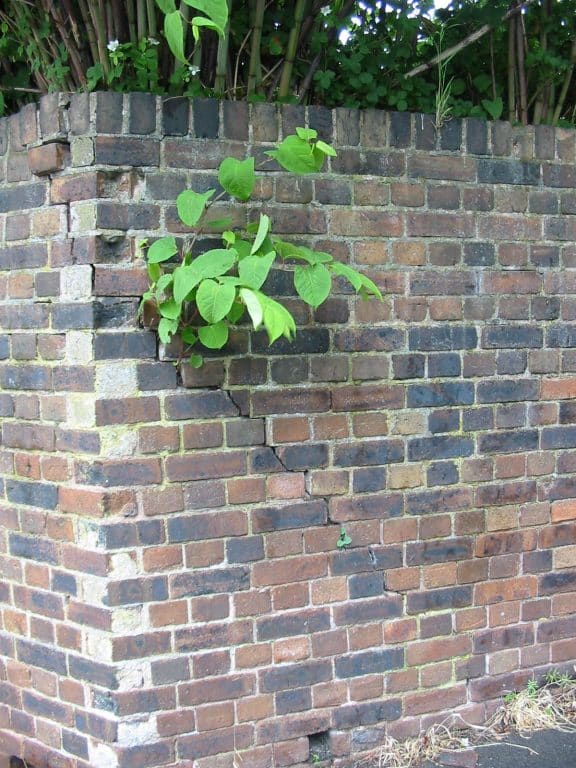
  • A rapidly-growing shrubby perennial that produces bright red shoots in spring
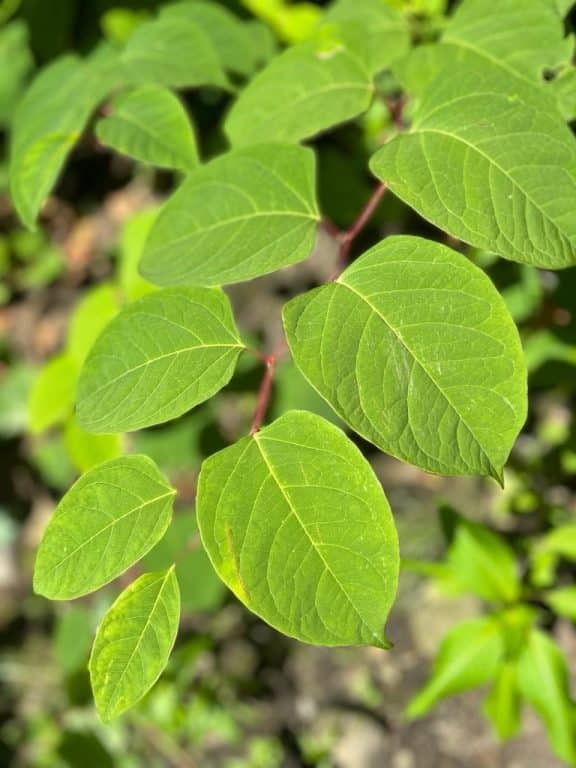
  • Large heart-shaped leaves
  • Bamboo-like arching, red-flecked stems

If you have these symptoms then call the doctor* (*Japanese Knotweed Solutions Ltd) straight away.

If you ignore the problem and hope that it will just ‘go away’ you are at high risk of the following side effects:

  • Reduced property value
  • Inability to sell your house
  • Low self-esteem
  • Slight itching sensation in your privates**
  • Red, itching blisters and pain on urination**

(**NB some of these symptoms are made up)

Mike C


Huge, Hybrid or Himalayan… all Happily, Hopping… Heverywhere…

April 4th, 2012 by Mike Clough

Just when you thought it was safe to go into your garden, something new has crept into the country…

Well they haven’t just crept in; they crept in a while ago.

How about some Giant knotweed in your garden sir? Once, you were impressed by the speed and rapidity of the growth of Japanese Knotweed but you will marvel as the giant form reaches to an impressive 5 metres in height. The large heart shaped leaves can be as large as 500mm from tip to stem.

Hybrid crosses are known to occur between Japanese Knotweed and its related species. One of these hybrids, Fallopia bohemica - the hybrid between Japanese Knotweed (Fallopia japonica) and Giant Knotweed (Fallopia sachalinensis) - has become far wider spread since it was first recognised in 1983. Fallopia bohemica is now present throughout Europe and is becoming increasingly problematic.

In the UK all seeds produced on Japanese Knotweed plants are hybrid in origin due to the absence of fertile male plants. The seed is often the product of hybridization with Russian vine (Fallopia balbschuanica) although currently on record there has only ever been one mature plant identified. This was a single plant found growing on railway sidings in Haringey, North London in 1992.

We at JKSL found a specimen which had the characteristics of both the parents – rapid growth and a creeping habit - and reported the find to DEFRA who asked that we burn and destroy it with all due care.

Other varieties to be aware of include Himalayan knotweed and Compact knotweed. Himalayan knotweed (Polygonum polystachum) can be distinguished from Japanese Knotweed by its slightly hairy stems and a longer more slender leaf shape. Himalayan knotweed will grow to 1.8 m in height and presents a rapid growth cycle similar to Japanese Knotweed.

The compact variety (Fallopia japonica var compacta) grows only to about a metre in height has reddish stems and a smaller more rounded leaf which has crinkled edges.

So many varieties to be on the lookout for!

Mike C.


US Invasion – I Love you YEAH YEAH YEAH

March 28th, 2012 by Mike Clough

Before the Beatles had conquered America we sent over a less friendly invader.

I have a picture of a Japanese Knotweed plant arriving on a boat, passing the Statue of Liberty thinking ‘I have arrived in the land of opportunity’. Mind you I’ve probably got my dates wrong – history was never my strongpoint.

Apparently Japanese Knotweed was introduced to the USA as a garden or yard plant form the British Isles. As early as the 1880’s it had become naturalised in the North Eastern States. Knotweed was regarded as a plant that could stabilise soils and was used on mine workings and on railways lines that had steep unstable embankments.

In its introduced range, Japanese Knotweed generally occurs in a variety of man-made habitats such as spoil heaps, along canal, stream and river banks as well as road verges, railway embankments and various urban habitats such as church grounds, neglected gardens and car parks. These growth patterns suggest that human disturbance assists its distribution.

The spread of JK into urban areas of the US is a reflection of its ability to withstand harsh conditions. The plant will cope with a variety of soil types as well as being tolerant of a wide range of acidity and alkalinity. Japanese Knotweed also shows a remarkable tolerance of habitats polluted by heavy metals or with a high salt content.

The spread of Japanese Knotweed into Canada is not clear. Likely origins are the British Isles or via immigrants from Japan or China (Child and Wade)…

Mike C


A bit of History: Japanese Knotweed - the early years.

March 21st, 2012 by Mike Clough

I’m forever hearing different stories about where Japanese Knotweed was first introduced and who brought the plant to the attention of the British gardeners. So to try and put the facts together lets summarise what we know.

Initially Japanese Knotweed was introduced as an ornamental plant and recommended for use as fodder.

A specimen of the plant was sent to Kew Gardens around 1855 from P.F.Von Siebold’s nursery in Leiden (the Netherlands). This was probably the first time that Japanese Knotweed was commercially available.

Prior to this the London Horticultural Society apparently had a sample that they had imported around 1825 under the Latin name Houttuynia cordata – this date is supported by an article in the French journal Revue Horticole (1858) which noted that Japanese Knotweed ‘has been cultivated for twenty years in the gardens of the Royal Horticultural Society in London’. The specimen apparently came from China and was planted in a man-made swamp at Kew.

JK was then found to be tolerant of dry ground and was recommended as an infill plant for the back of the plant bed or as an isolated specimen within a lawned area. By 1850 the plant had been given the scientific name Polygonum cuspidatum (Siebold and Zuccarini).

The invasive nature of Japanese Knotweed was soon observed and by 1905 the Journal of the Royal Horticultural Society no longer advised planting – unless it was ‘most carefully kept in check’.

Mike C

NB Thanks to Max Wade and Lois Child – The Japanese Knotweed Manual.


Purple Cow Knotweed Solutions…

March 14th, 2012 by Mike Clough

When you drive along the motorway of life most things that you see will blend in to insignificance.

You will get bored of the mundane and reach a point when you don’t even notice it any more.

Hence the Purple Cow theory, you’re driving along, you see a field of cows …its interesting, you look…then eventually you stop noticing the field of cows…until there is A PURPLE COW…and you notice.

This is how I have always approached the marketing of Japanese Knotweed Solutions.

I believe that the reason that invasive plants have been so successful in the UK, is that we as a nation have become immune to noticing them. How many of you had noticed or even heard of Japanese Knotweed until I started shouting about it? If I had a pound for every time someone said to me ‘Japanese whatweed?’ I would be a rich man…

Invasive plants rely on the majority of people not taking them seriously. They rely on sneaking up and taking over that piece of wasteland that nobody has developed yet. They rely on nobody doing anything until it’s too late…and too bloody expensive.

So Japanese Knotweed Solutions will continue to shout and continue to offend.

We shall continue to be bold and bright with our marketing to attract the attention of the uninformed. We shall continue to hold seminars and put offensive adverts in magazines and continue to drive around in vehicles that burn into your eyeballs with the bright colours and catchy slogans.

We shall continue to be a Purple Cow – if that’s what it takes to fight back against apathy.

We shall continue to shout - if that’s what it takes to restore the British Countryside to its bio diverse natural condition.

Mike C


E: jk@sltd.co.uk
T: 0161 723 2000


© Japanese Knotweed Solutions Ltd
Design by Blueleaf