
Blog
Pesticides Are Everywhere — Even the Banned Ones
Author: Chris Oliver
Date Posted: Thursday 20th November 2025

0161 723 2000
8AM to 5PM
Author: Chris Oliver
Date Posted: Thursday 20th November 2025
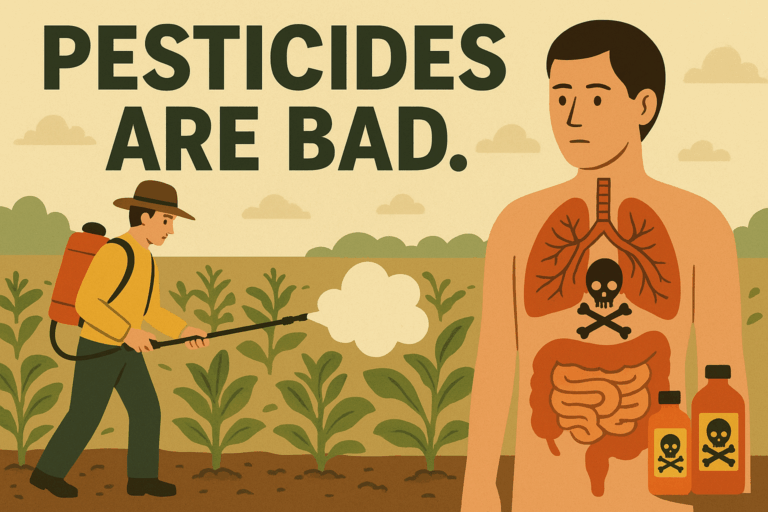
Pesticides are bad – we all know this (except for the people who use them, manufacture them, approve them and people who realise that pesticide use is a necessary evil if we’re to have other evil things like trains, modern agriculture and houses that don’t have Japanese knotweed growing through them).
Japanese Knotweed Solutions uses pesticides – but we also encourage and implement Integrated Pest Management (IPM) – an approach which considers all options, including physical control and other pesticide-free approaches to weed control as part of a recommended treatment programme. This helps to ensure the most effective control and keep pesticide use at sustainable levels.
On a personal level, I don’t think anyone would disagree that finding pesticides in our bodies is not so good – but that’s exactly what a recent study in the Netherlands found.
The study involved 641 people across ten different countries in Europe, and found exposure to 173 separate chemicals out of 193 substances tested for, including some banned pesticides. The average number of pesticides each participant was exposed to was 20 but this could be an underestimate, as there are many approved pesticides in the EU which were not tested for.
The study included farmers (both organic and non-organic), who were exposed to the highest numbers of pesticides, and people who lived near and far from farms. People living far from farms still averaged 17 substances per person, with non-organic farmers averaging the highest at 36 substances per individual.
One of the substances tested for was breakdown products of DDT – a herbicide that has been banned for 55 years in the Netherlands and for many years in other European countries, but which is known to persist for long periods in the environment. The finding of DDT derivatives is worrying, but probably more indicative of the longevity of the chemical, rather than an indication that DDT use is taking place in EU farms, given that global DDT production and use is very limited at this time (generally only for indoor control of malarial mosquitos).
But how do banned substances like dieldrin and propoxur (also insecticides banned for use in the EU) find their way to the environment around farmers and civilians? Propoxur is approved for use in the USA, Canada, Australia and also in India and some African nations, where Dieldrin is also approved for use under certain restrictions. These products are therefore available for sale in other jurisdictions.
It is possible that the products are also present due to their persistent presence in soil or on surfaces, but it’s also possible that they are products previously bought legitimately, now being used or disposed of into the environment after their expiry / use by dates by farmers or other professional users who are unaware of or deliberately flouting the rules. Such use could be due to the cost of replacing held stock, and the cost of disposing of the products legitimately (expired products must generally be disposed of as hazardous waste, which can carry a significant costs) or because the products are available more cheaply than registered products, to those who know where to look.
Such products are known to be sold on the black market and could be used either by farmers who don’t know what they are using (who have bought banned products relabelled to resemble approved products) or by any professional or amateur user who has knowingly bought products not suitable for use in the EU. Such products could be imported from countries where they are legal for sale and then sold on cheaply, either with or without being re-labelled.
Counterfeiting and unlawful sale is a known issue in the UK and the EU, and could become worse a increasing numbers of herbicides are withdrawn from use – which could also create more “stranded” produce that has been bought legitimately but by users who can’t use up their stock in time, so keep using it beyond the approved date.
This issue is unlikely to go away unless there is suitable consideration of the realities of modern farming (including education and resources regarding modern farming research and methods), support for farmers and measures to deal with the issue, including enforcement on all kinds of professional users. Addressing the cost pressures facing farmers and the pressure on sales prices is also significant due to the centralised market in countries like the UK where supermarket contracts for products force producers to seek economies wherever they can.
There are frequent calls to ban pesticides, particularly glyphosate, and there are rightly measures in place from governments to control pesticide use, including banned substances and requirements for integrated pest management, but if farmers are denied the tools to properly manage agriculture and not enabled (either financially or legally) to implement alternative measures, then it is likely that they will turn to the black market for solutions that they know to be effective – leaving farmers at risk of purchasing illicit and banned substances, which can affect crops, and also meaning that these substances can find their way into the food chain or other scenarios where people can be exposed to them in the soil, water and air.
While it’s a common lobbying tactic of big businesses to threaten that black market activity will creep in when legislation takes something away, it’s easy to see from this study that such a ban could conceivably have real-world consequences worse than potential exposure to glyphosate and that this should be factored into any safety assessments carried out to consider the safety implications of the product approval – as well as bans being complemented by appropriate enforcement measures.
Chris Oliver
Operations Manager